EHS & ESG Excellence Drives Great Chemistry
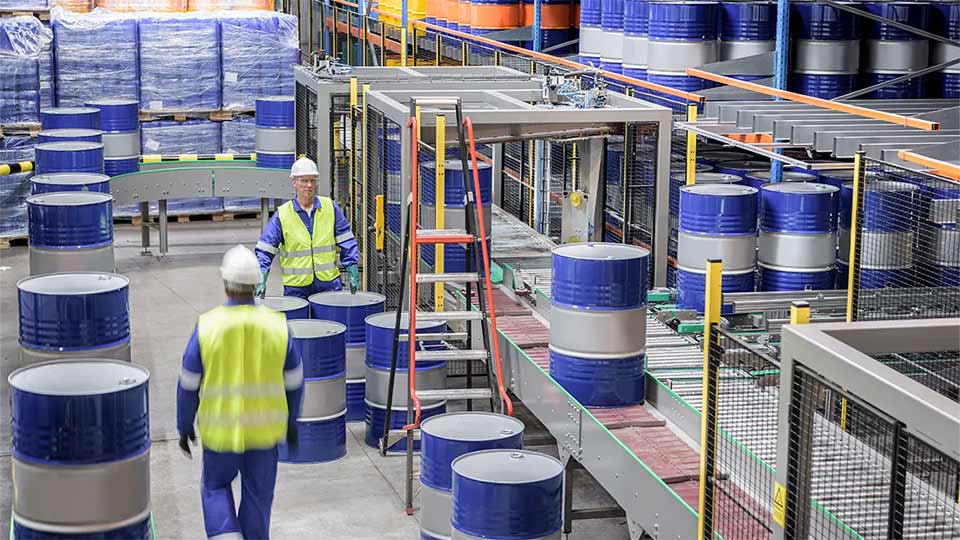
Decades of experience helping global enterprises to simplify chemical management and regulatory compliance makes VelocityEHS the perfect partner for ESG and operational excellence.
Features and Benefits
The VelocityEHS Accelerate® Platform delivers best-in-class risk management tools for complex manufacturing processes.

Ensure Compliance
Maintain up-to-date chemical inventories, provide right-to-know access to SDSs, and simplify environmental reporting with EPA Title V and hazardous waste manifest tracking.

Predict & Prevent
Get powerful risk management capabilities, like bowtie analysis, to expertly predict and ID uncontrolled risk and take aggressive mitigation steps before trouble arises.

Gain Visiblity
Centralize and standardize programs, actions and dashboards. Automate data collection and reporting so decision makers are full informed and operating with fresh intel.
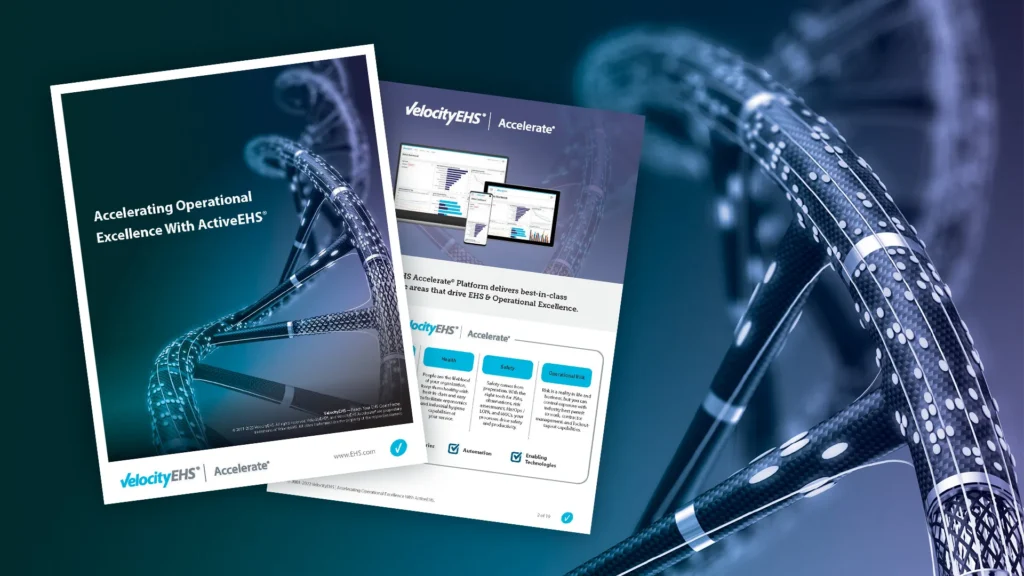
Accelerating Operational Excellence
with ActiveEHS®
White Paper
See what VelocityEHS has in store for you with VelocityEHS Accelerate® Platform and ActiveEHS®.
Download NowVelocityEHS Solutions

Safety
Simplify the key aspects of safety, whether you’re a safety management veteran or new to the role.

Industrial Ergonomics
Minimize the risk of MSDs and reduce the costs associated with lost productivity and injury expenses.

Control of Work
Control hazardous work activities more effectively with permit-to-work, contractor management, visitor management, and additional SaaS tools.

Chemical Management
Take command of your chemical container management, ingredient indexing, and regulatory reporting.

ESG
Make your ESG program a competitive advantage with data insights that will help you see your company in a whole new light.

Operational Risk
Gain an enterprise-level view of risk with the ability to pinpoint and evaluate all types of hazards, implement and verify risk controls, and harmonize risk management activities.

Environmental Compliance
Taking care of your people and community includes managing your air, water and waste streams. We can help.
Safety
Simplify the key aspects of safety, whether you’re a safety management veteran or new to the role.
Industrial Ergonomics
Minimize the risk of MSDs and reduce the costs associated with lost productivity and injury expenses.
Control of Work
Control hazardous work activities more effectively with permit-to-work, contractor management, visitor management, and additional SaaS tools.
Chemical Management
Take command of your chemical container management, ingredient indexing, and regulatory reporting.
ESG
Make your ESG program a competitive advantage with data insights that will help you see your company in a whole new light.
Operational Risk
Gain an enterprise-level view of risk with the ability to pinpoint and evaluate all types of hazards, implement and verify risk controls, and harmonize risk management activities.
Environmental Compliance
Taking care of your people and community includes managing your air, water and waste streams. We can help.
Introduction to Hazcom
Ebook
Managing hazard communication (HazCom) is a huge responsibility, but also a great opportunity to improve workplace safety and become an EHS leader. Our free eBook covers the fundamentals of effective HazCom management, including getting a handle on your hazardous chemical inventory, managing SDS access for your workforce, and more.
What can the VelocityEHS Accelerate® Platform do for you?
Learn from the best
We’re invested in your continued education and success. Check out the latest industry news, our most recent blogs, and helpful training resources that will ensure you stay ahead of the curve.
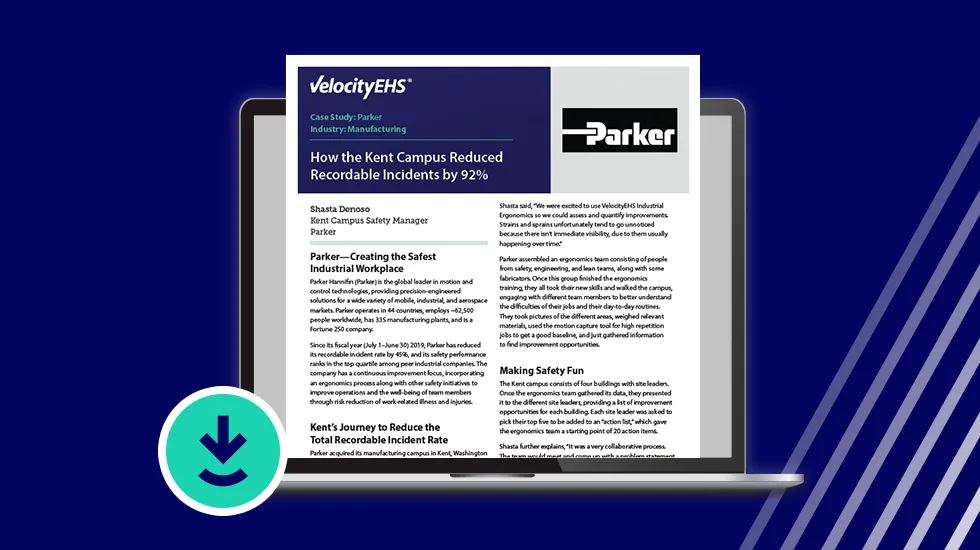
New Case Study—Parker, Kent Campus: How They Reduced Recordable Incidents by 92% Using Ergonomics
Ergonomics
Parker Kent campus shares how they made safety fun while improving employee engagement and proactively reducing workplace risks.

California’s ESG Disclosure Rules: What You Need to Know
ESG
California is now the first US state with ESG disclosure requirements. Here are some major takeaways about California’s ESG disclosure rules.

The Ergonomics Hit List®: A Simple Tool to Identify Issues in the Workplace
Ergonomics
In industrial environments, it’s important to take the time to properly assess the workplace for musculoskeletal disorder (MSDs) risks which can lead to sprains, st…
Partner with the most trusted name in the industry
Stress less and achieve more with VelocityEHS at your side. Our products and services are among the most recognized by industry associations and professionals for overall excellence and ease of use.